Project Overview
My Qpick frontend development work focused on turning design files into responsive interfaces across a large set of screens. I worked from Figma and Photoshop designs, implementing layouts and repeated interface patterns with attention to consistency across devices.
The project involved approximately 80–100 screens and 150–200 reusable UI components. The main production delivery period covered six months within a one-year engagement.
At this scale, each screen is part of a wider system. A change to a shared pattern can affect many parts of the interface, making reuse and consistency central to the implementation.
My Role in Qpick Frontend Development
I worked as a Frontend Developer. My contribution centred on implementing the supplied designs and refining their behaviour across screen sizes.
My responsibilities included:
- Converting Figma and Photoshop designs into frontend interfaces.
- Building reusable UI components.
- Implementing responsive layouts.
- Supporting API-connected interface functionality.
- Testing across browsers and devices.
- Addressing QA feedback through iterative improvements.
The work required both attention to individual screens and an understanding of how they fitted together. A reusable component needed to support the wider interface, rather than solve only one layout.
The Challenge
The main challenge was maintaining visual consistency while delivering a substantial volume of frontend work within an active production schedule.
Repeated patterns needed to remain familiar across different screens. At the same time, each layout had to accommodate its own content and responsive requirements.
Design files provided the visual starting point. Implementation also required decisions about how content should wrap, how spacing should adapt and how interface elements should behave when less screen space was available.
Building Reusable Components
I built repeated interface patterns with HTML, Sass, JavaScript and Bootstrap.
Reuse helped connect the screens through a shared approach to structure and styling. Instead of treating every instance as an isolated piece of markup, common patterns could be implemented consistently.
This approach also supported iteration. When a shared pattern needed refinement, the component provided a clear place to make that change.
For a project with this many screens, those implementation decisions were an important part of managing the frontend work.
Responsive Qpick Frontend Development
Responsive behaviour was part of the implementation across desktop, tablet and mobile layouts.
Adapting a screen involves more than reducing its width. Content may need a different arrangement, navigation needs suitable space, and text must remain readable as the layout changes.
My work focused on translating the designs into layouts that accounted for those differences while maintaining a consistent visual language.
Testing and Iteration
The delivery process included cross-browser and multi-device testing, followed by refinements based on QA feedback.
Testing provided another view of the implementation beyond the original design files. It helped identify where layouts or interactions needed further work under different viewing conditions.
At this scale, a component also needs to be considered in context. A pattern that fits one screen may need adjustment when used with different content elsewhere in the product.
Key Screens
Main Platform Screens
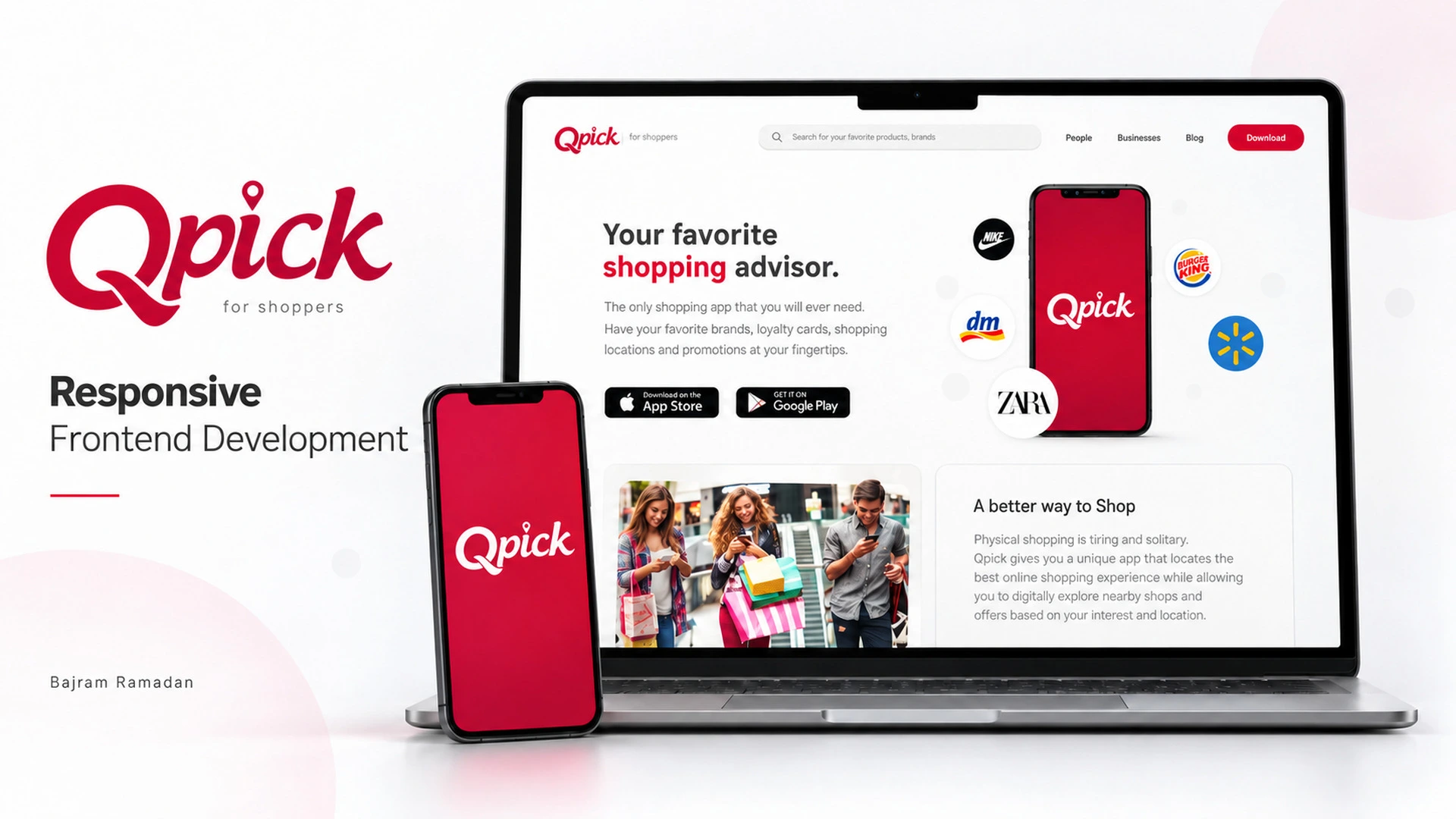
Frontend layouts translated the supplied visual designs into responsive screens for the platform.
QpickMenu
This part of the project brought together navigation, content and recurring interface patterns within a structured frontend experience.
Smaller-Screen Layouts
Responsive adaptations addressed spacing, hierarchy and usability on smaller displays.
The Result
The work contributed approximately 80–100 responsive screens and 150–200 reusable UI components, with the main production delivery taking place over six months.
Qpick demonstrates my experience implementing a large set of interfaces from existing designs. It also shows the importance of connecting component reuse, responsive behaviour and QA throughout frontend delivery.
The project is an example of my implementation work within an active product workflow, where consistency matters across both individual screens and the interface as a whole.
Need Frontend Support for Your Product?
If you have designs ready for implementation or need support building a consistent set of responsive interfaces, I would be happy to discuss your project.